After divorce or separation, many parents try to track child expenses but get stuck on a basic question: what actually counts? This guide explains which costs are usually worth recording, which expenses may be questioned, and how to keep your records clear enough to review later.
This article is for general information only and is not legal advice.
If you already know what to record and need a stronger documentation workflow, read our guide on how to document child expenses after divorce. DivKids also gives parents a private place to record child expenses, receipt photos, notes and summaries at DivKids.
Quick answer
Child-related expenses are costs connected to your child’s care, daily life, health, education, activities or living needs. Common examples include food, clothing, school costs, medical bills, childcare, transport and sometimes a reasonable share of housing or utilities.
- What counts: costs that are clearly connected to the child, not general adult spending.
- How to document it: keep the receipt, invoice, payment record or note with date, amount, category and child.
- Where parents get stuck: manual notes and spreadsheets often lose receipt photos, context and chronology over time.
Key points
- Use 6-10 stable categories so monthly totals are easy to compare.
- Record each expense with date, amount, child, category, short note and proof if available.
- Review costs once a month instead of waiting until a dispute starts.
- Separate everyday costs from large one-time expenses, such as glasses, camps or medical bills.
- If a cost benefits more than one child, note that clearly instead of guessing later.
- For housing or utilities, record the method you used to estimate the child’s share.
- Excel can work at the beginning, but it becomes weaker when receipts, notes and categories live in different places.
- A clear expense history is easier to review than a pile of receipts without context.
- Quick answer
- Key points
- What counts as a child-related expense after divorce?
- Which everyday costs do parents often forget?
- What about school, medical, childcare and activities?
- Can housing and utilities count as child expenses?
- How should shared and extra expenses be handled?
- What may not count as a child-related expense?
- What proof is strongest?
- Weak record vs strong record
- Common mistakes
- How to handle this in practice
- How DivKids can help
- Legal notes and sources
- Key takeaways
What counts as a child-related expense after divorce?
A child-related expense is any cost that reasonably connects to the child’s care, needs, development or daily life. It does not have to be dramatic or unusual. Many important costs are small, regular and easy to forget.
For example, school shoes, medicine, lunch supplies, bus fare, daycare invoices and sports equipment can all matter when they show the real cost of raising a child. The goal is not to turn every purchase into an argument. The goal is to keep a clear, consistent record.
Rules and agreements differ. Some costs may be covered by regular child support, some may be shared separately, and some may be disputed. That is why clean records matter: they help a parent explain what was paid, when it was paid and why it was connected to the child.
Which everyday costs do parents often forget?
Parents often remember large bills but miss the smaller costs that happen every week. Over several months, those small entries can explain a large part of the child’s real cost.
- Food and groceries: meals, school snacks, packed lunches and groceries used during parenting time.
- Clothing and shoes: seasonal clothes, school clothes, sports shoes, winter coats and basic essentials.
- Personal care: hygiene products, haircuts, diapers, toiletries or age-specific care items.
- Transport: fuel, public transport, parking, school travel or travel connected with exchanges.
- Small school costs: supplies, class contributions, photos, trips, uniforms and project materials.
Small costs are easier to explain when they are grouped by category. A monthly total for clothing or school supplies is usually clearer than a long story about every single purchase.
What about school, medical, childcare and activities?
School, medical, childcare and activity costs are often easier to identify because they usually come with invoices, bills, receipts or written confirmations.
School and education
Track school supplies, uniforms, textbooks, tutoring, school fees, class trips, exams, after-school programs and special learning materials. If the school sends an invoice or email, save it with the expense.
Medical, dental and therapy costs
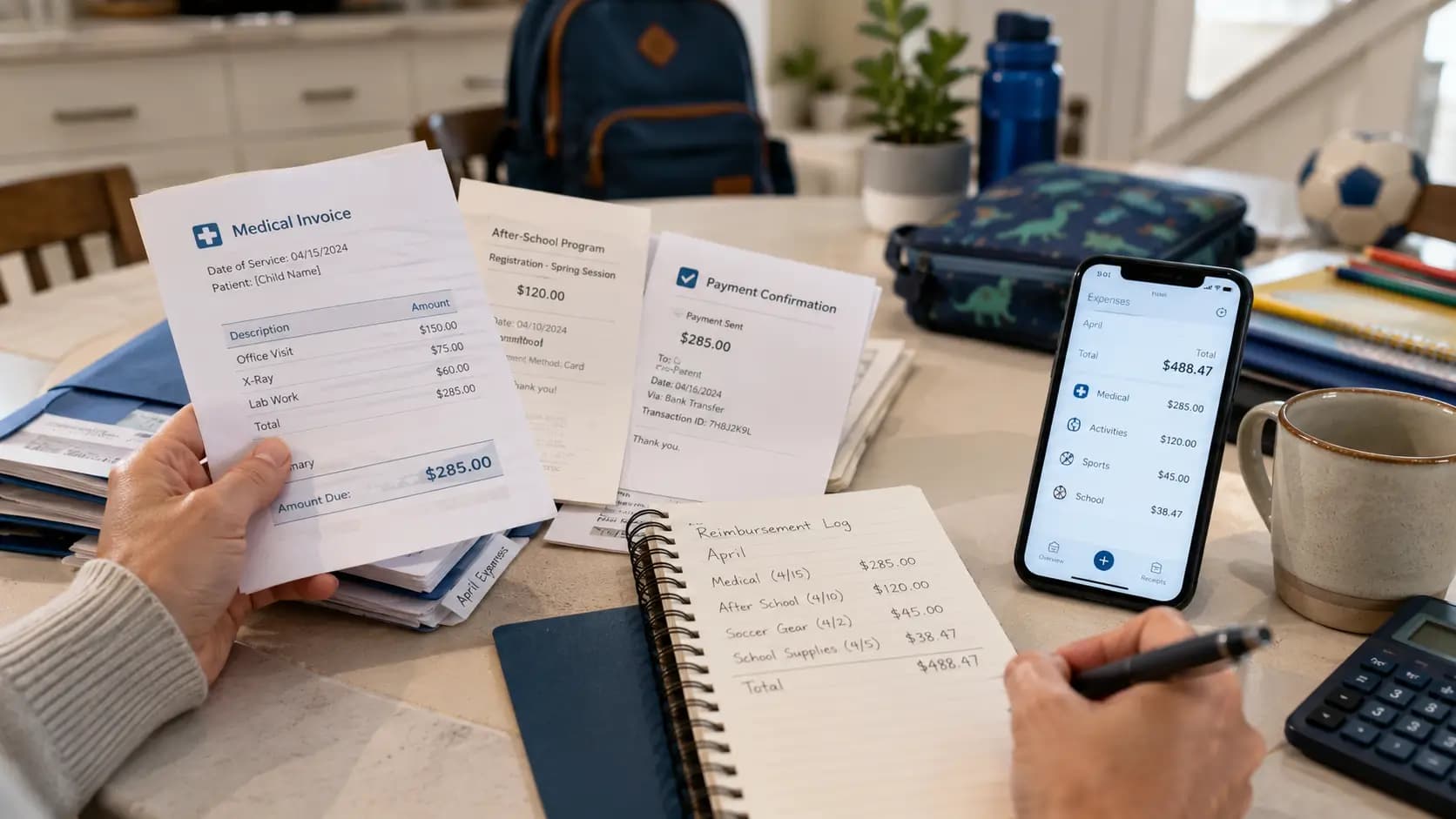
Record doctor visits, dental care, prescriptions, glasses, therapy, insurance-related costs, copays and out-of-pocket medical bills. If you receive an Explanation of Benefits, invoice or payment confirmation, keep it with the record.
Childcare
Daycare, babysitting, after-school care, summer care and work-related childcare can be important categories. Record the provider, period covered, amount and payment proof.
Activities and enrichment
Sports, music lessons, dance, clubs, camps, equipment and activity fees may be relevant, especially when they are regular or agreed between parents. Keep registration confirmations and receipts for equipment.
Can housing and utilities count as child expenses?
Housing and utilities can be sensitive because they are shared household costs. Still, a child needs a place to live, sleep, eat, study and keep belongings. In some situations, parents track a reasonable child-related share of rent, mortgage, electricity, heating, internet or other home costs.
The safest approach is to be transparent. Do not write „housing” as one unexplained number. Add a short note explaining the method, for example: „estimated child’s share of rent and utilities for May” or „one child’s share in a two-child household.”
Different courts, agreements and child support systems may treat housing differently. If housing costs are important in your case, ask a qualified family-law attorney how to present them in your jurisdiction.
How should shared and extra expenses be handled?
Some expenses are paid by one parent but may be discussed, shared or reimbursed later. These are the costs where records can reduce confusion.
- medical bills not fully covered by insurance,
- dental or orthodontic treatment,
- school trips and required school fees,
- childcare needed for work,
- sports registration and equipment,
- therapy, tutoring or special needs support,
- larger seasonal costs, such as winter clothes or glasses.
If the other parent agreed to an expense by text or email, save that message. If you requested reimbursement, note the date, amount, what you sent and whether payment was received.
What may not count as a child-related expense?
Some costs may be connected to the child but still be disputed. That does not mean you should never record them. It means you should add context and avoid assuming that every cost will automatically be accepted or reimbursed.
- Expensive gifts: a birthday present may be child-related, but it may not be treated like a necessary expense.
- Vacations and trips: separate the child’s direct costs from adult travel, hotels or entertainment.
- Electronics: explain whether the device was for school, safety, communication or entertainment.
- Cash purchases: add a note if no receipt exists and connect any bank withdrawal or message if possible.
- Mixed shopping receipts: identify which line items were for the child.
- Luxury or unusual costs: keep stronger proof and explain the reason clearly.
A record is stronger when the reader can understand the purpose without guessing. In expense documentation, context often matters as much as the amount.
What proof is strongest?
Not every record has the same weight. A simple note is better than nothing, but a note with a receipt and payment proof is much stronger.
- Invoice or official bill: usually strongest because it shows who charged the fee, what it was for and how much was due.
- Receipt with payment proof: strong when it shows the item, amount, date and method of payment.
- Bank or card record: helpful for proving payment, but it may not show what was bought.
- Email, message or confirmation: useful for showing agreement, request for reimbursement or context.
- Photo or screenshot: helpful when complete, dated and connected to the expense.
- Note from memory: better than silence, but weakest if it is not supported by another record.
In practice, the best record usually combines more than one piece: expense entry, receipt photo, payment proof and short note.
Weak record vs strong record
The same expense can be unclear or useful depending on how it is recorded.
| Weak record | Strong record |
|---|---|
| $80 Walmart | $80 school shoes for Emma, Jan 12, clothing category, receipt photo attached |
| Doctor bill | $45 pediatric copay, Jan 18, medical category, receipt and appointment note |
| Soccer | $120 spring soccer registration, Feb 2, activity category, confirmation email saved |
| Gas | $24 estimated transport for school event, Feb 7, note explaining route and purpose |
| School stuff | $42 school supplies, Jan 8, school category, receipt photo with child name |
The strong version does not need a long story. It simply connects amount, purpose, date, child, category and proof.
Practical tip
If your child expenses are spread across receipts, messages and bank history, the hardest part is not one receipt. It is keeping the full timeline readable.
DivKids helps you record expenses as they happen, add receipt photos, use categories, write notes and review monthly summaries in one private place.
Common mistakes
- Recording only large expenses. Small regular costs can add up and explain the real monthly pattern.
- Mixing adult and child costs. A receipt is clearer when the child-related items are identified.
- Waiting months to enter costs. Late entries depend too much on memory.
- Using only bank statements. A bank record may show where money was spent, but not what was bought for the child.
- Changing categories every month. Inconsistent labels make totals harder to compare.
- Keeping proof in too many places. Receipts, screenshots, emails and notes are weaker when they are not connected to the expense.
How to handle this in practice
- Choose your categories first. Start with food, clothing, school, medical, childcare, activities, transport, housing and other.
- Add the expense the same day. Record the amount, date, child and short purpose while details are fresh.
- Attach proof when possible. Use a receipt photo, invoice, payment confirmation, email or note.
- Review totals monthly. Look for missing categories, unusual costs and large one-time expenses.
- Generate a statement only when needed. The daily habit matters first. A readable statement is the result of records you already kept.
In documentation, order and chronology matter more than memory. A parent who records costs regularly can usually explain the child’s needs more clearly than a parent rebuilding the numbers at the last minute.
How DivKids can help
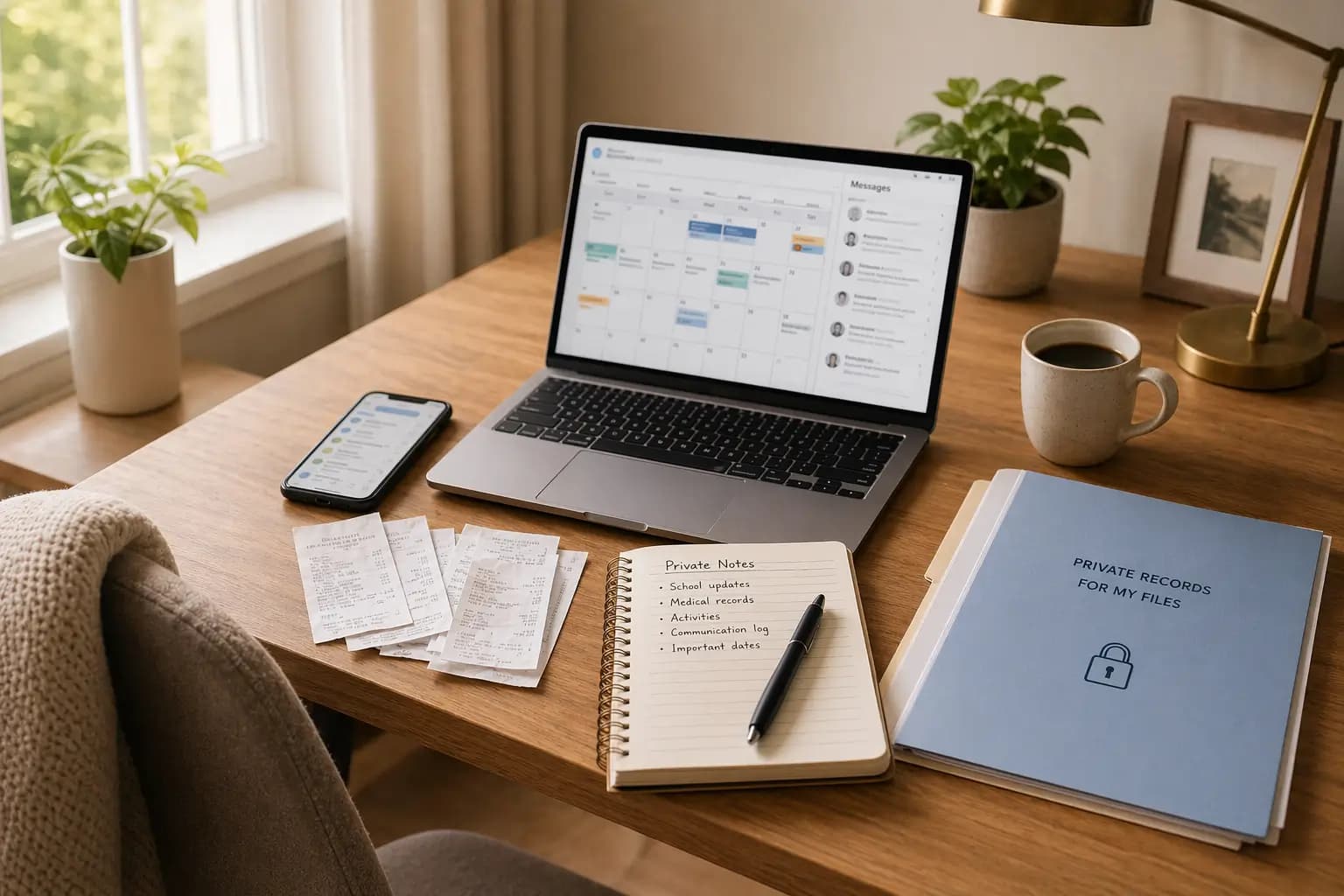
DivKids is useful when you want child expense records to become part of daily life instead of a stressful project before mediation or court. You can add expenses, assign them to a child, choose a category, write a short note and save receipt photos in one private account.
This is different from a shared co-parenting tool. DivKids is designed for one parent, so the other parent does not see or edit your records. You decide what to keep, review and share when needed.
It also connects with parenting-time records. If both time and money matter in your situation, our parenting time tracker guide explains how those records can work together.
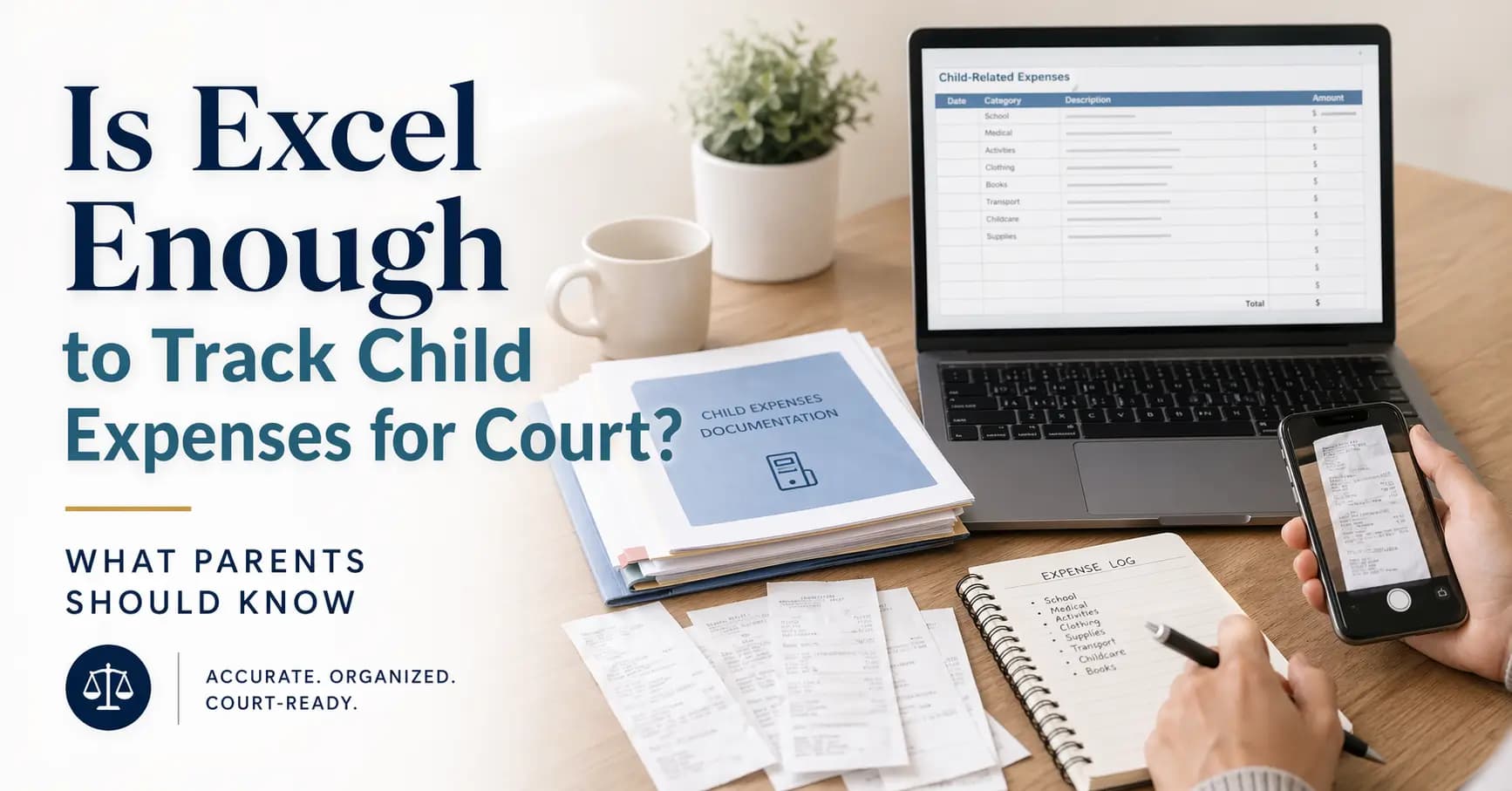
If you are wondering whether a spreadsheet is enough, read Is Excel Enough to Track Child Expenses for Court?. Excel can be a start, but many parents outgrow it when receipts, notes, categories and summaries need to stay connected.
For a product-focused walkthrough, see our child expense tracker guide.
Legal notes and sources
Family-law rules vary by country, state, county and court. This article gives a general documentation framework, not advice for a specific case.
For U.S. readers, official and legal-help resources explain that child support is connected with a child’s living expenses and that parents may need to bring proof of payments or related documents in child support proceedings.
- California Courts Self-Help: Child Support
- TexasLawHelp: What to Expect in Child Support Court
- United States Courts: Federal Rules of Evidence
Before filing records or relying on them in a legal dispute, ask a qualified family-law attorney or your local court how evidence should be prepared and submitted.
Key takeaways
- Child-related expenses are costs connected to the child’s care, daily life, health, education, activities or living needs.
- Use a repeatable method: date, amount, child, category, note and proof.
- For housing or shared costs, record the method and context instead of using unexplained totals.
- Small monthly costs can matter, especially when they are tracked consistently over time.
- Receipts are more useful when they are connected to categories, notes and the right child.
- A clear expense history helps parents, lawyers and mediators review facts faster than scattered receipts.
- If you want to organize this on an ongoing basis and keep a readable statement ready, you can create a free DivKids account.
Frequently Asked Questions
What counts as a child-related expense after divorce?
Should I track small child expenses?
Can housing and utilities be included as child expenses?
What proof should I keep for child-related expenses?
Is a spreadsheet enough to track child expenses?