If you’re a parent with care in the UK trying to increase child maintenance through a CMS variation, you already know the system puts the burden of proof entirely on you. The Child Maintenance Service works on what the non-resident parent declares as income – and they’re not required to provide evidence unless you prove there’s something to investigate.
This creates a frustrating situation: you know your ex-partner earns more than they claim, you see the expensive holidays on social media, the new car, the investment properties – but how do you prove it? And how do you document your child’s actual expenses when CMS says your current maintenance isn’t enough?
The financial stakes are significant. A successful variation application can increase your child maintenance by £3,000 to £9,000 annually. But you only have 14 days to provide evidence once CMS requests it, or your application gets rejected. Miss that deadline, and you’re back to square one.
This guide shows you exactly what evidence CMS accepts, how to gather it without investigatory powers, and how to organize it into compelling variation applications that actually succeed.
Understanding CMS Variation Grounds and Evidence Thresholds
The Child Maintenance Service allows you to apply for a variation in four main circumstances that might apply to your situation. Understanding these grounds is crucial because each requires specific types of evidence.
The Four Main Variation Grounds
1. Unearned Income Over £2,500 Per Year
This includes rental income from properties, dividends from shares, or interest from investments. If your ex-partner owns rental properties but declares only their employed income, this is your route. You need to prove the property ownership and demonstrate rental income exceeds the £2,500 threshold.
2. Assets Worth Over £31,250
CMS calls this „notional income from assets.” If the non-resident parent has significant assets that could generate income – investment properties, substantial savings accounts, valuable collections – but claims poverty based on their declared salary, you can argue they should be assessed on potential income from these assets.
3. Diverted Income
This is when someone deliberately reduces their income to avoid maintenance payments. Common scenarios include: taking payment through a company they control instead of salary, channeling income to a new partner, or taking benefits in kind rather than cash salary. This is harder to prove but often the most lucrative if successful.
4. Lifestyle Inconsistent with Declared Income
While not an official variation ground, this can trigger a Financial Investigation Unit (FIU) referral. If someone claims to earn £20,000 but drives a £60,000 car, takes frequent foreign holidays, and lives in an expensive property, CMS may investigate. Your evidence of this lifestyle contradiction becomes the catalyst.
The critical fact most parents don’t realize: CMS cannot investigate unless you provide the initial proof. They won’t search property records, check Companies House, or investigate social media. That responsibility falls entirely on you.
How to Document Hidden Income Without Investigatory Powers
This is where most variation applications fail – not because the suspicions are wrong, but because the evidence isn’t properly documented. Here’s how to build a bulletproof case.
Companies House Searches
If your ex-partner runs a limited company, Companies House is your goldmine of free information. Every UK company must file annual accounts showing turnover, profits, and director remuneration.
Search the company name or their name as a director on Companies House. Download the last three years of accounts. Look for:
- Director salary vs. company profits (are they taking minimal salary but leaving profits in the company?)
- Dividends paid to shareholders
- Director’s loans (borrowing from their own company to avoid income tax)
- Multiple companies in their name
Document everything with screenshots and save the official PDFs. Note the filing dates – companies often file late, which itself suggests poor financial management that CMS considers.
Land Registry Searches
Property ownership is one of the strongest pieces of evidence because it’s objective and verifiable. The UK Land Registry lets you search for properties by owner name for £3 per property.
Search for properties in:
- Your ex-partner’s name
- Their new partner’s name (if applicable)
- Their business name
- Alternative spellings of their name
Once you identify properties, get the Official Copy of the Register (£3-7 depending on download method). This shows:
- Purchase price and date
- Mortgage details
- Rental income potential (you can check rental listings for similar properties)
If they own multiple properties, calculate potential rental income. A property renting for £850/month = £10,200 annual income, well over the £2,500 threshold.
Social Media Evidence Collection
Instagram, Facebook, and LinkedIn often tell a story that contradicts claimed poverty. But you need to document this properly – screenshots alone aren’t always accepted.
Best practices:
- Use screenshot tools that include date, time, and URL
- Capture the full page context, not just the image
- Document patterns over time (one holiday photo means nothing; six luxury holidays in a year tells a story)
- Note tagged locations, companions, and spending indicators
- Look for business pages showing income-generating activities
What CMS considers valuable social media evidence:
- Multiple expensive purchases (cars, watches, technology)
- Frequent international travel, especially long-haul or business class
- Properties in vacation destinations
- Business activities not declared to CMS
- Posts about bonuses, promotions, or new business ventures
Critical point: Document everything chronologically in a timeline. „Lifestyle inconsistent with declared £25,000 income” becomes powerful when you show: March 2024 – Dubai holiday, May 2024 – new £40,000 car, July 2024 – purchased second property, September 2024 – two-week Caribbean cruise.
Bank Statements and Financial Records
You typically won’t have access to your ex-partner’s bank statements, but if you do (from prior court proceedings, shared accounts before separation, or voluntary disclosure), they’re powerful evidence.
Look for:
- Regular deposits that exceed declared salary
- Cash deposits (suggesting cash-in-hand work)
- Transfers from business accounts
- Large purchases inconsistent with claimed income
- Payments labeled as „rent” or „dividends”
Third-Party Corroboration
Sometimes friends, family, or former colleagues can provide statutory declarations about the non-resident parent’s true income or lifestyle. While CMS prefers documentary evidence, witness statements can support your case, especially for diverted income claims.
A former business partner’s statement that your ex routinely takes £10,000 monthly from their company carries weight. A neighbor’s statement about rental properties being occupied supports your rental income claim.
Tracking Child Expenses to Prove Current Maintenance is Insufficient
Sometimes you’re not trying to prove hidden income – you’re demonstrating that your child’s actual expenses far exceed what the current maintenance assessment covers. This requires meticulous documentation.
What Expenses CMS Considers
CMS variation applications for „special expenses” must show costs beyond normal day-to-day care:
- Contact costs: Travel to see the non-resident parent if they live far away
- Illness or disability: Extra costs due to the child’s medical needs
- Education expenses: School trips, uniforms, equipment (not tuition for private schools)
- Debt from the relationship: Loans taken out for the child before separation
But even if you’re not claiming special expenses, documenting all child-related spending builds your case that the current maintenance is inadequate.
Receipt Capture Best Practices
The foundation of expense documentation is capturing receipts in the moment. The problem with manual systems? By the time you need evidence for CMS, you’re scrambling to find receipts from six months ago.
Effective receipt capture requires:
- Immediate photographing: Take a photo as soon as you make the purchase
- Clear image quality: Ensure the date, vendor, amount, and items are legible
- Consistent naming: „2024-11-15_School_Uniform_Marks_Spencer.jpg” is searchable; „IMG_2847.jpg” is not
- Backup storage: Cloud storage so evidence isn’t lost if your phone dies
Expense Categorization by CMS Standards
CMS looks for patterns of spending, not random receipts. Organize expenses into categories they recognize:
- School costs (uniforms, trips, equipment, after-school clubs)
- Clothing and footwear
- Food and groceries
- Medical expenses (prescriptions, dental, optical)
- Childcare costs
- Sports and activities
- Transport costs
- Birthday and Christmas gifts
For each category, track monthly spending over at least three months. This shows CMS: „School expenses alone average £287/month, which exceeds the £240/month maintenance I currently receive.”
Timeline Documentation
CMS needs to see ongoing expenses, not one-off costs. Your evidence should show:
- Consistent monthly spending patterns
- Seasonal variations (back-to-school costs in September, Christmas in December)
- Age-appropriate increases (teenagers cost more than toddlers)
- Unexpected but necessary expenses (replacing outgrown clothes, broken glasses)
Present this as a timeline: January £310, February £285, March £340, and so on. The pattern proves these aren’t exceptional costs – this is your reality every month.
Supporting Documentation for Significant Expenses
For larger expenses, CMS expects supporting evidence beyond receipts:
- School trips: The school’s letter requesting payment + receipt
- Medical costs: Prescription receipts + GP letter confirming ongoing treatment
- Childcare: Contract with provider + monthly invoices
- After-school activities: Registration confirmation + term payment receipts
This supporting documentation proves the expenses are legitimate, necessary, and ongoing – not inflated claims to increase maintenance.
Building Your CMS Variation Application Evidence Pack
You’ve gathered the evidence. Now you need to organize it in a way that CMS accepts and finds compelling. This is where most applications fail – not from lack of evidence, but from poor presentation.
Chronological Organization
CMS caseworkers review dozens of applications daily. Make their job easy. Organize evidence chronologically within each category:
- Section 1: Overview – One-page summary of your claim and total evidence provided
- Section 2: Property Evidence – Land Registry documents in order of purchase date
- Section 3: Business Income Evidence – Companies House accounts, newest to oldest
- Section 4: Lifestyle Evidence – Social media evidence organized by date
- Section 5: Expense Documentation – Categorized expenses with monthly summaries
Label every document: „Exhibit A: Land Registry Search – 15 Oak Avenue – Showing Purchase September 2022.”
Creating Summary Reports CMS Accepts
CMS explicitly states they reject „vague statements or incomplete documents.” Your summary report must be professional, specific, and backed by exhibits.
Effective summary structure:
- Executive Summary: One paragraph stating your claim („I am applying for a variation based on unearned income from rental properties exceeding £2,500 annually”)
- Evidence Summary: Bullet list of what you’re providing („Three Land Registry documents, twelve months of rental listings for comparable properties, tenant review evidence”)
- Financial Calculation: Show your math („Property 1: £850/month x 12 = £10,200. Property 2: £775/month x 12 = £9,300. Total rental income: £19,500/year”)
- Current vs. Proposed Assessment: What maintenance you receive now vs. what you believe is correct based on the evidence
PDF Formatting for Professional Presentation
Submit everything as a single, properly formatted PDF with:
- Cover page with your reference number, child’s details (anonymized), and application date
- Numbered pages („Page 1 of 47”)
- Table of contents with page references
- Clear section dividers
- High-quality images (not blurry phone photos)
- Bookmarks in the PDF for easy navigation
CMS sees professionally presented evidence as more credible. Messy Word documents with random screenshots scattered throughout get rejected.
Cover Letters and Submission Process
Your cover letter should be formal but direct:
- State your CMS reference number
- Identify the variation ground you’re applying under
- List the exhibits you’re providing
- Request specific action („I request CMS review the non-resident parent’s income assessment based on the rental income evidence provided”)
- Provide your contact details for follow-up questions
Submit via the method CMS specifies in their variation request. Usually this is uploading to their portal, but sometimes they require postal submission. Keep proof of submission – timestamps, upload confirmations, or tracked delivery receipts.
Manual Tracking vs. Purpose-Built Documentation Tools
By now, you’ve realized proper CMS evidence documentation is a massive undertaking. Let’s compare your realistic options.
Spreadsheet Tracking
Pros: Free, flexible, you control the format
Cons: No receipt storage, requires manual data entry, easy to make calculation errors, not mobile-friendly, no automatic backups, time-consuming to create reports
Reality check: Most parents start with spreadsheets and abandon them after two weeks. Then they scramble to recreate months of spending from bank statements when CMS requests evidence.
Paper Diaries and Receipt Folders
Pros: Simple, doesn’t require technology
Cons: Receipts fade, folders get lost, can’t be backed up, takes hours to organize for submission, unprofessional presentation
Reality check: Paper systems rarely survive the 6-12 months between starting documentation and needing it for CMS.
Generic Expense Apps
Pros: Better than spreadsheets, cloud backup
Cons: Not designed for UK family law, categories don’t match CMS requirements, can’t generate court-ready reports, no guidance on what evidence CMS needs
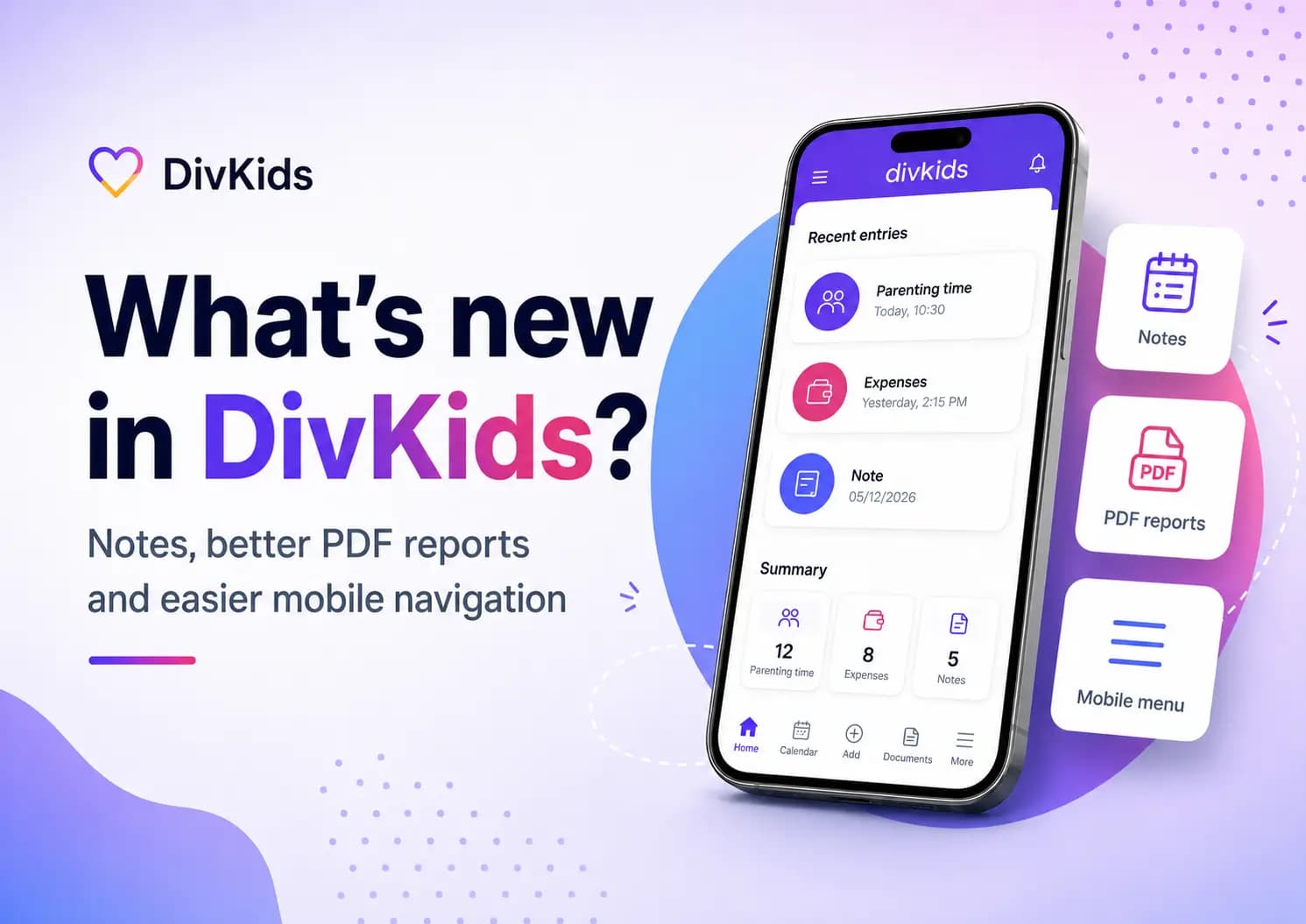
DivKids: UK CMS-Specific Solution
DivKids was built specifically for UK parents navigating child maintenance documentation. Key features designed around CMS requirements:
- Photo receipt capture: Take pictures as you spend, stored securely in the cloud
- Automatic categorization: Expenses organized into CMS-recognized categories
- Child allocation: If you have multiple children, split expenses accurately
- Timeline view: See spending patterns CMS looks for
- Court-ready PDF reports: Professional evidence packs formatted to CMS standards
- Secure storage: GDPR-compliant UK data storage
The time savings alone justify it – what takes 20 hours to organize manually happens in minutes with proper tools. But the real value? Not losing your CMS case because you couldn’t produce organized evidence in the 14-day deadline.
When the financial stakes are £3,000-9,000 annually in recovered maintenance, spending £10/month on proper documentation isn’t an expense – it’s insurance that your variation application succeeds.
Take Control of Your CMS Variation Application
The Child Maintenance Service system puts an unfair burden on parents with care – you must prove income discrepancies or expense needs without any investigatory powers. But now you know exactly how to build a compelling evidence pack that CMS cannot ignore.
Remember the key principles:
- Start documenting NOW, before you need it
- Organize evidence professionally – presentation matters
- Focus on objective, verifiable evidence (Land Registry, Companies House, receipts)
- Show patterns and timelines, not isolated incidents
- Meet the 14-day evidence deadline with ready-to-go documentation
The difference between a successful variation application and a rejected one isn’t usually the strength of your suspicions – it’s the quality of your documentation. Proper evidence can recover thousands of pounds annually for your child. Disorganized evidence gets dismissed, and you’re stuck with inadequate maintenance.
Don’t wait until CMS requests evidence to start organizing. By then, you’re racing against a 14-day deadline and scrambling to recreate months of expenses. Start systematic documentation today, and when the time comes to submit your variation application, you’ll have everything CMS needs to rule in your favor.
Frequently Asked Questions
What evidence do I need for a CMS variation application in the UK?
How long do I have to provide evidence to CMS once they request it?
Can I use social media posts as evidence of hidden income for CMS?
What income threshold triggers a CMS variation for unearned income?
How much can I realistically increase child maintenance through a successful CMS variation?